

Table of Contents
- What Is Green Water and Why It Happens
- Causes of Green Water in Fish Tank
- Step 1: Test Your Water Parameters
- Step 2: Perform Partial Water Changes and Maintenance
- Step 3: Use a UV Sterilizer, The Best UV Sterilizer for Aquarium
- Step 4: How to Reduce Aquarium Light Duration
- Step 5: Implement a Blackout Method for Rapid Results
- Common Mistakes to Avoid When Clearing Green Water
- Frequently Asked Questions
Last Updated: September 25, 2026
What Is Green Water and Why It Happens
Green water is an aquarium condition caused by a rapid bloom of suspended algae cells, primarily phytoplankton, floating freely in the water column. The water takes on a cloudy, pea-soup appearance that makes it impossible to see into the tank. Unlike algae that grows on surfaces, this suspended algae creates turbidity that blocks light from reaching your aquatic ecosystem.
The reason green water develops comes down to one core problem: excess nutrients combined with too much light. When nitrate and phosphate levels spike and your lighting runs too long, phytoplankton cells multiply exponentially. This is not a sign of poor care, it's actually a sign that your tank has the ingredients for life to thrive. The problem is that it's thriving in the wrong form.
At Premium Aquatics, we've helped countless hobbyists understand that green water is one of the most frustrating but also most fixable problems in aquarium keeping. The good news is that once you know how to clear green water in aquarium systems, you can prevent it from coming back.
Causes of Green Water in Fish Tank
Several factors work together to create the conditions for green water. Understanding these causes helps you prevent future blooms and fix the current one faster.
Excess nutrients in the water column is the primary driver. Uneaten food, decaying plant matter, and fish waste all break down into nitrate and phosphate. When these accumulate faster than your biological filtration can process them, phytoplankton has an all-you-can-eat buffet. The more nutrients available, the faster the algae multiplies.
Lighting duration and intensity directly fuels photosynthesis. If your aquarium lights run for 8-10 hours or more daily, you're giving algae spores the energy they need to reproduce rapidly. Many beginners think more light means healthier plants, but excessive light without proper nutrient export creates the opposite effect.
Inadequate water changes allow dissolved organics to accumulate. When you skip water changes or perform very small ones, the nutrient load builds up. Partial water changes dilute these excess nutrients and remove some of the dissolved organic compounds that fuel algae blooms.
Tank immaturity is another common culprit. New tanks lack established biological filtration. Beneficial bacteria colonies haven't colonized your substrate and filter media yet, so they can't process waste efficiently. This is why green water often appears in the first few weeks after setup.
Poor mechanical filtration means larger particles of organic matter remain in suspension longer, breaking down into dissolved nutrients. If your filter isn't removing debris effectively, you're extending the time those nutrients stay available to algae.
Step 1: Test Your Water Parameters
Before treating green water, you need baseline data. Testing reveals whether nutrient levels are actually elevated or if another factor is driving the bloom. This step prevents you from chasing the wrong solution.
Test for these key parameters:
- Nitrate (NO₃): Healthy levels are below 20 ppm. Above 40 ppm indicates excess nutrients fueling algae.
- Phosphate (PO₄): Keep this below 0.5 ppm. Phosphate is especially potent at triggering algae blooms.
- pH: Most tanks run 6.5-7.5 for freshwater. Extreme pH can stress fish, which produces more waste.
- Ammonia and Nitrite: These should always read zero in an established tank. If they're elevated, your biological filtration is failing.
Use a liquid test kit rather than test strips, they're more accurate. Perform tests at the same time each day to track trends. If nitrate and phosphate are sky-high, you've confirmed excess nutrients are the problem. If they're normal but you still have green water, the issue is likely lighting duration or tank age.
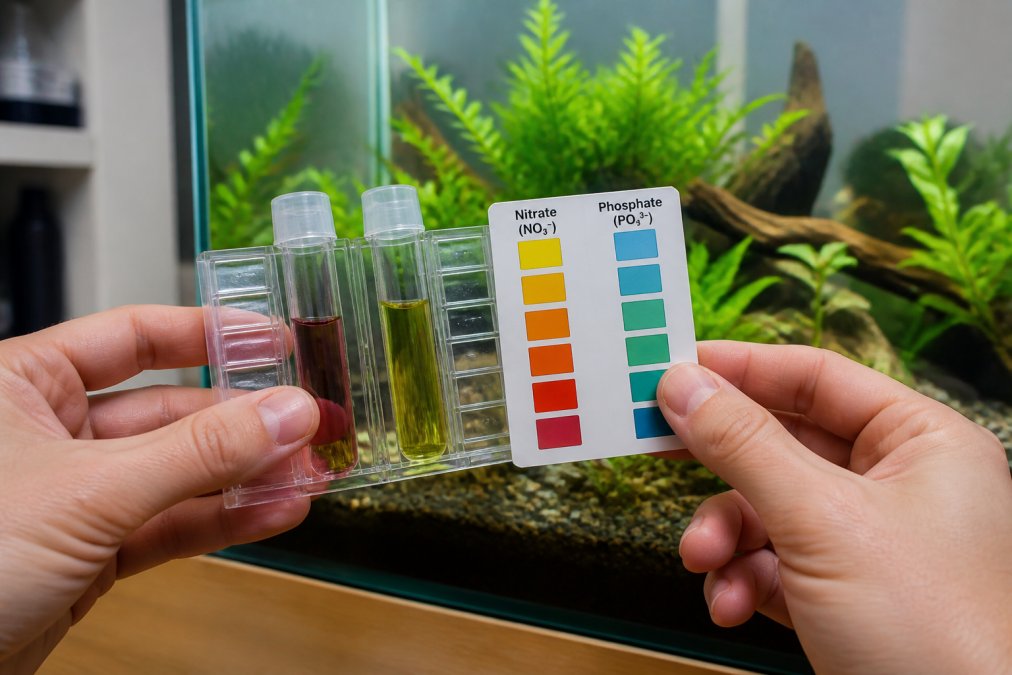
Record your results.
Step 2: Perform Partial Water Changes and Maintenance
Partial water changes are your first line of defense. They dilute excess nutrients and remove suspended algae cells mechanically. A 25-30% water change removes roughly that percentage of dissolved nutrients from the tank.
Here's the process:
- Perform a water change every 2-3 days until green water clears
- Remove 25-30% of the tank volume
- Use a gravel siphon to vacuum the substrate thoroughly, this removes decaying organic matter before it breaks down into nutrients
- Replace with fresh dechlorinated water at the same temperature
Step 3: Use a UV Sterilizer, The Best UV Sterilizer for Aquarium
UV sterilization is the most effective method for clearing green water rapidly. When water passes through a UV sterilizer, ultraviolet light damages the DNA of suspended algae cells and bacteria, killing them on contact. According to Aqueon and Aquarium Co-Op's 2024 industry analysis, UV sterilizers are the most effective and effortless method for clearing green water and are now widely adopted across the hobby.
How UV sterilizers work:
Installation tips:
- Place the UV sterilizer in your filter return line so all water passes through it
- Ensure adequate flow rate, too slow and algae cells escape; too fast and they don't receive enough UV exposure
- Replace the UV lamp annually; the lamp loses effectiveness over time even if it still glows
Step 4: How to Reduce Aquarium Light Duration
Excess light is fuel for algae. Reducing your photoperiod (light cycle) starves the bloom of energy needed for photosynthesis. This step works especially well when combined with UV sterilization and water changes.
Adjust your light schedule:
- Reduce to 6 hours per day during treatment
- Use a timer to keep the schedule consistent
- Avoid sudden darkness changes, reduce by 1-2 hours every few days rather than cutting from 10 to 4 hours overnight
Step 5: Implement a Blackout Method for Rapid Results
A total blackout accelerates green water elimination but comes with a trade-off. According to Buce Plant and FishLore's 2024 community protocols, blackout methods involve reducing lighting to 4-6 hours per day or implementing total tank blackouts for up to 7 days. However, Aquarium Co-Op's 2024 research notes that while effective at killing algae, extended blackouts can be detrimental to live plants.
How the blackout works:
Blackout protocol:
- Cover the tank completely with opaque material (black cloth, cardboard, or a blanket)
- Keep all lights off for 5-7 days
- Continue feeding fish normally (they'll eat in darkness)
- Perform one 50% water change on day 3 or 4 to remove dead algae
- Remove the cover and resume normal lighting after day 7
Common Mistakes to Avoid When Clearing Green Water
Mistake 1: Treating green water as a filter problem. Many hobbyists assume a better filter will solve it. Green water is a nutrient and light problem, not a filtration problem. A stronger filter helps prevent future blooms by removing more debris, but it won't clear an existing bloom. Focus on nutrient removal and light reduction first. Consistent water changes are essential for managing these nutrient levels, though success depends on properly removing tap water chlorine before it enters your tank.
Frequently Asked Questions
Does a UV sterilizer clear green water?
Yes, UV sterilizers are highly effective at clearing green water caused by phytoplankton and suspended algae. When sized correctly for your tank, UV sterilizers can clear water in 3 to 5 days by destroying algae cells as water passes through. The Aqua Ultraviolet Advantage 2000+ sterilizes up to 500 gallons of freshwater or 75 gallons of saltwater. However, UV works best when combined with water changes and reduced lighting to address the root causes of the bloom.
What kills green algae in water naturally?
Several natural methods reduce green water without chemicals. Reducing your photoperiod to 4-6 hours per day limits photosynthesis that fuels algae growth. A total blackout for 5-7 days kills suspended algae spores while allowing your biological filtration to stabilize. Partial water changes remove excess nutrients (nitrates and phosphates) that feed algae blooms. Gravel siphoning removes dissolved organics from the substrate, reducing nutrient buildup in the water column.
How long does it take to clear an algae bloom?
Timeline depends on your method. UV sterilizers typically clear green water in 3 to 5 days when properly sized and installed. A total blackout combined with water changes can show results within 3-5 days, though aquatic plants may suffer. Reducing lighting alone takes 1-2 weeks. Combining methods, such as UV treatment with reduced light duration and partial water changes, produces the fastest results and prevents the bloom from returning.
Why is my fish tank water green but clear?
This describes a bacterial bloom, not algae. Bacterial blooms occur when dissolved organics accumulate faster than your biological filtration can process them, causing cloudiness. Unlike green water from phytoplankton, bacterial blooms don't respond well to UV sterilizers. Instead, perform 25-50% water changes daily, avoid overfeeding, clean your substrate with a gravel siphon, and ensure your filter media is not clogged. A mature tank with established biological filtration typically clears within 3-7 days.
Green water is frustrating, but it's one of the most solvable problems in aquarium keeping. Test your water parameters, reduce nutrients through regular water changes, cut your lighting duration, and consider a UV sterilizer for rapid results. Premium Aquatics carries professional-grade UV sterilizers and offers expert support to help you choose the right equipment for your setup. Get started with a UV sterilizer from Premium Aquatics and clear your green water in days instead of weeks.

